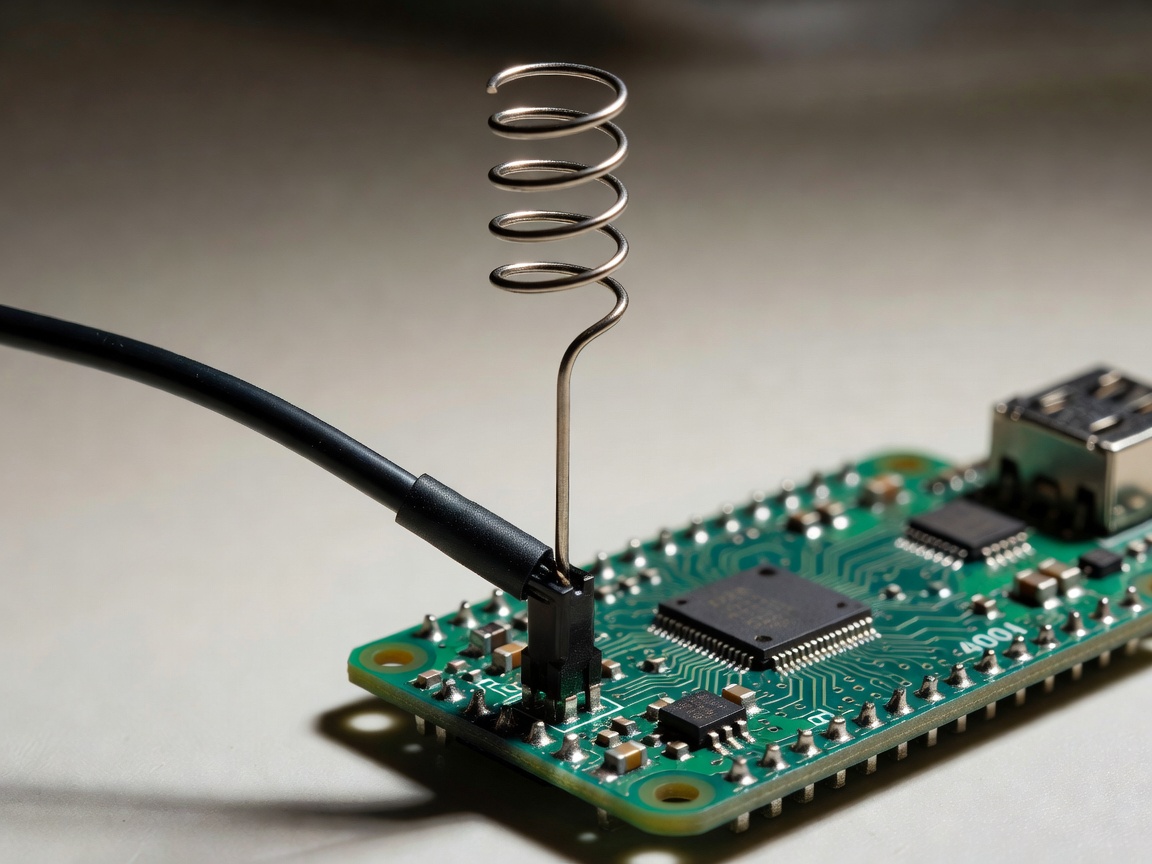
While smartphone-based Bluetooth meshes are great for crowded areas, they fail entirely in sparse, rural, or highly distributed scenarios. If your nearest neighbor is a mile away, WiFi Direct simply will not bridge the gap. To build a robust off-grid communication network over vast distances, you must delve into the hardware layer.
Understanding LoRa
LoRa (Long Range) is a radio modulation technique that excels in low-power, wide-area networks (LPWAN). Unlike standard WiFi, which pushes high bandwidth over short distances, LoRa sacrifices speed for incredible range and penetration. Operating in unlicensed ISM radio bands (like 868 MHz in Europe and 915 MHz in North America), LoRa can transmit tiny packets of data—like text messages or GPS coordinates—over distances of 1 to 10 miles in urban environments, and upwards of 50+ miles with line-of-sight from a high elevation.
The Meshtastic Project
Meshtastic is an open-source, decentralized mesh networking system built on top of LoRa technology. It transforms inexpensive ($30-$50) microcontrollers into a robust, encrypted, peer-to-peer communication network.
Here is how it works in practice:
- You purchase a LoRa development board (such as the LILYGO T-Beam or Heltec V3).
- You flash the free Meshtastic firmware onto the board.
- You connect your standard smartphone to the board via Bluetooth.
- Using the Meshtastic app on your phone, you type a message. The app sends the text via Bluetooth to the board in your pocket.
- The board broadcasts the encrypted message over LoRa radio frequencies.
Any other Meshtastic node in range receives the signal. If the message is intended for them, it displays. If not, the node automatically repeats the signal, bouncing it further down the chain. This mesh architecture allows a message to hop across a valley, node by node, reaching destinations far beyond the transmission range of a single device.
Hardware Choices and Specifications
When selecting hardware for a mesh node, there are several factors to balance: battery life, GPS capability, and antenna quality.
| Device Series | Integrated GPS | Screen Type | Power Profile |
|---|---|---|---|
| LILYGO T-Beam | Yes | Small OLED | Moderate (18650 Battery) |
| Heltec V3 | No | Small OLED | Low (LiPo support) |
| RAK WisBlock | Optional Module | None (headless) | Ultra-Low (Solar ready) |
Range and Limitations
The biggest misconception about LoRa mesh networking is the expected range. Radio frequency propagation is entirely dependent on physics. If you are standing in a dense forest or a concrete city, your range may be restricted to half a mile. If you place a repeater node on top of a water tower or a mountain peak, that single node can cover hundreds of square miles.
Successful off-grid mesh networks rely on strategic placement of repeater nodes. By setting up low-power, solar-charged "router" nodes in elevated positions, local communities can establish communication infrastructure that is entirely immune to power grid failures and ISP blackouts. This creates a resilient foundation for emergency coordination and everyday off-grid life.