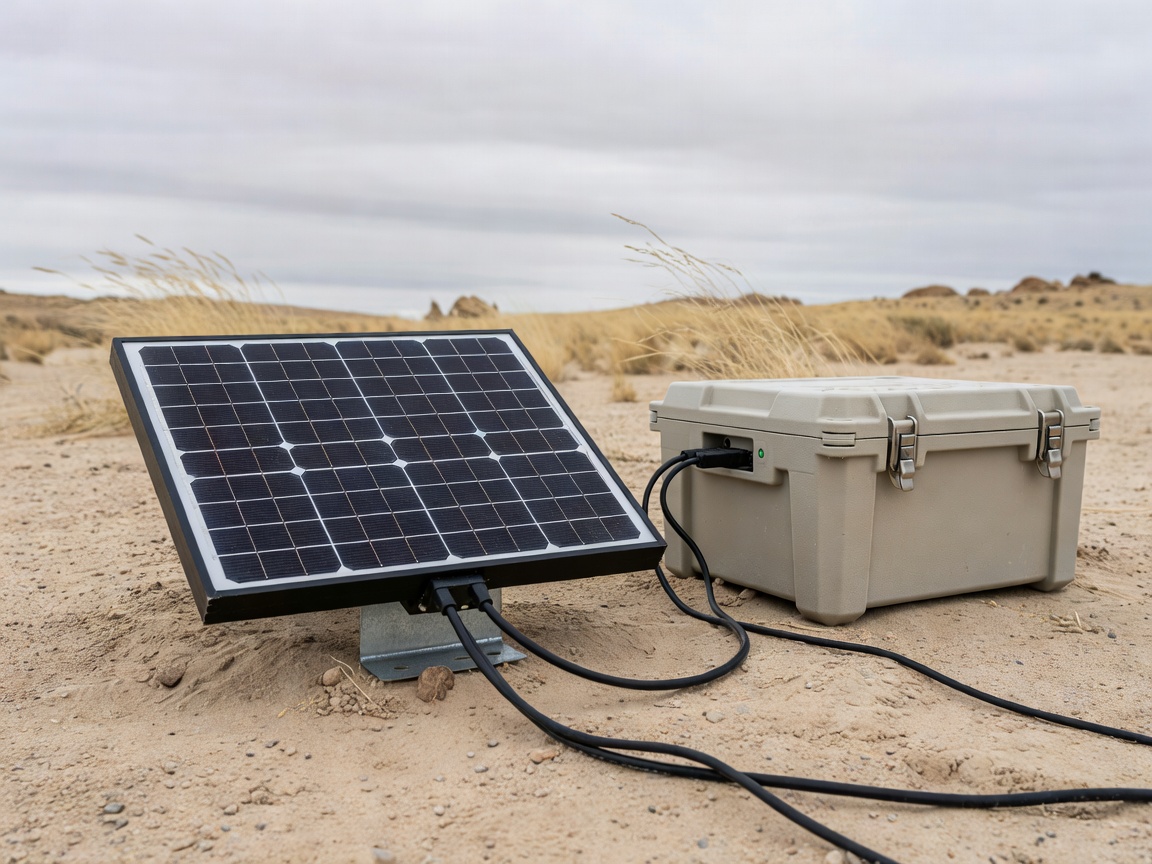
Building an independent communication network or local data relay is an exercise in futility if the system dies three days after a power grid failure. To create a truly resilient offline infrastructure, nodes must be able to sustain themselves indefinitely. This requires precise calculations balancing power consumption, battery capacity, and solar regeneration.
The Power Budget
Before purchasing a single solar panel, you must calculate your power budget. A device like an ESP32 microcontroller running a LoRa radio module typically consumes around 100 to 120 milliamps (mA) constantly. While that sounds negligible compared to a smartphone, running 24/7 means it will consume nearly 3 Amp-hours (Ah) per day at 3.3 volts.
To survive a stretch of cloudy, overcast days in mid-winter, the battery must hold at least five to seven days' worth of power, and the solar panel must be capable of fully recharging that battery within just a few hours of weak, indirect sunlight.
Battery Chemistries
Selecting the right battery for an outdoor, solar-charged node is critical. Extreme temperatures can severely degrade or destroy batteries.
- Lithium Polymer (LiPo): Common in hobbyist electronics. Highly energy dense but volatile. LiPo batteries can swell or vent if overcharged, and they suffer severe capacity loss in freezing temperatures. Not recommended for permanent outdoor installations.
- Lithium-Ion (18650 cells): The standard for consumer electronics and electric vehicles. Reliable and cheap, but they cannot be charged at temperatures below freezing (0°C / 32°F) without causing permanent metallic lithium plating and rapid failure.
- Lithium Iron Phosphate (LiFePO4): The gold standard for off-grid nodes. Slightly heavier and more expensive, but highly stable, immune to thermal runaway, and capable of thousands of charge cycles. Note: Like standard Li-Ion, they still require heating or charge-blocking below freezing.
| Component | Specification Target | Reasoning |
|---|---|---|
| Solar Panel | 5W to 10W (Monocrystalline) | Provides enough current to run the node and charge the battery even on overcast days. |
| Charge Controller | MPPT or specifically designed for Li-Ion | Maximizes efficiency of variable voltage from the panel and protects the battery from overcharge. |
| Enclosure | IP67 Rated, UV Resistant | Protects delicate microcontrollers and batteries from rain, humidity, and direct sun damage. |
Charge Controllers and Efficiency
Never connect a solar panel directly to a battery. A dedicated solar charge controller is mandatory. For small 5V/3.3V nodes, chips like the TP4056 are commonly used, but they are linear regulators—meaning they bleed excess solar voltage off as heat, which is highly inefficient.
For permanent nodes, utilizing a Maximum Power Point Tracking (MPPT) or specialized switching charge controller designed specifically for solar inputs ensures that you harvest every drop of energy the panel provides, particularly during dawn and dusk hours.
Enclosures and Siting
Heat is the enemy of electronics. When placing a solar node, the panel needs direct sunlight, but the enclosure containing the battery and microcontroller should ideally be shaded. Using reflective paints (white or metallic) on the enclosure and ensuring adequate ventilation or desiccant packets inside prevents condensation and thermal throttling. By carefully balancing the power budget and managing environmental factors, a well-built solar node can operate completely untouched for five to ten years.